How do electrical apprenticeships work?
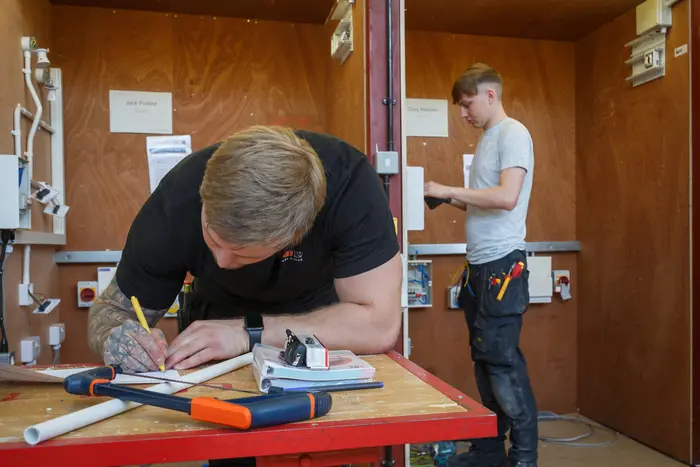
Apprenticeships have long been viewed as the ‘gold standard’ qualification for entry into the electrotechnical industry. Here’s how they work.
To put it simply, an electrical apprenticeship enables you to become a fully qualified electrician without having to pay for any of your training. Instead, you work with both an employer and a training organisation (such as a college) to develop a mixture of on-the-job knowledge and essential theory, enabling you to obtain the proper qualifications required to qualify as an electrician while earning a salary.
Why do employers take on electrical apprenticeships?
Firstly, apprenticeships offer a reliable way for employers to future-proof their business and upskill their workforce, as modern apprentices receive training in the latest technologies and up-to-date electrotechnical theory.
Secondly, training costs for apprentices are heavily subsidised by the government and there are some cash incentives for employers taking on apprentices, meaning they aren’t on the hook for the full cost of your education and training.
What types of electrical apprenticeships are there?
In England, the two main types of electrical apprenticeships available to you are:
Level 3 Domestic Electrician: this prepares you for work solely in domestic settings, meaning people’s homes. This typically takes three years to complete.
Level 3 Installation and Maintenance Electrician: this prepares you for electrical work in domestic settings, as well as commercial premises and industrial settings. This typically takes four years to complete.
Northern Ireland and Wales both use the same qualifications system as England, where you earn a Level 3 qualification at the end of your apprenticeship, but they operate according to slightly different frameworks. In Wales, you can take the Level 3 Building Services Engineering – Electrotechnical Installation apprenticeship, while Northern Irish learners can take the Level 3 Electrotechnical apprenticeship. These both typically take four years to complete.
In Scotland, things work a little differently. Scottish apprentices will take the Modern Apprenticeship in Electrical Installations, which qualifies you to SCQF (Scottish Credit and Qualifications Framework) Level 7 (equivalent to a Level 3 NVQ). This typically takes between three and five years to complete.
What happens during an electrical apprenticeship?
The day-to-day training you receive will depend upon the electrical apprenticeship you choose, the country you’re in, and which employer you work with. However, there will be a good degree of overlap between the types of apprenticeships, particularly when starting out. Your training will typically be split between one day per week of classroom work and four days spent on the job with your employer.
For more information on what to expect from electrical apprenticeships, visit https://www.apprenticeships.gov.uk/apprentices and hear more from current and former apprentices.
What do you learn during an electrical apprenticeship?
Electrical apprenticeships equip you with a solid knowledge base of electrical principles, technical specifications and best practices. This base then supports all of the practical on-site skills you will learn under the supervision of an experienced electrician.
When you start out, you will typically learn how to carry out basic wiring and termination of simple electrical systems and equipment. As your skills develop, you will progress to working with more complex systems. Eventually, you will be able to operate independently and be ready to qualify as a fully trained electrician.
What qualifications do I get from an electrical apprenticeship?
You will receive a Level 3 qualification at the end of your electrical apprenticeship (apart from in Scotland, where you’ll receive an equivalent SCQF 7 qualification).
This qualification will enable you to apply for your ECS gold card, which acts as proof that you are fully qualified to undertake unsupervised electrical work. This card enables those who have one to practice as an independent electrician.
Once you've completed your apprenticeship and applied for your gold card, you may, like many newly qualified electricians, choose to continue working for your apprenticeship provider to build up your experience. Once established in your career, you may decide to continue as an employed electrician or to strike out alone and start your own business.
How do I find an employer and start an electrical apprenticeship?
If you want to find out more about how to find an employer and get your apprenticeship started, you can read our step-by-step guide here.