5 top tips to attract an apprentice to your business
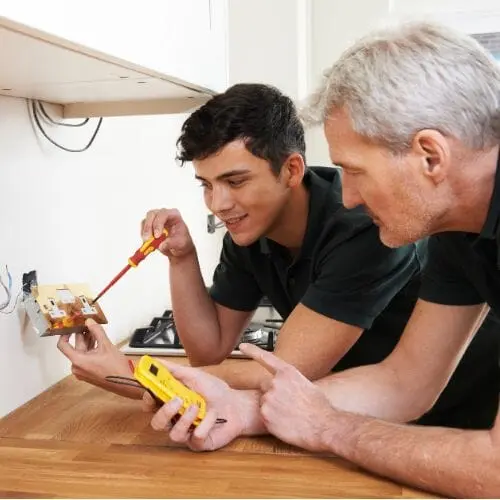
In this article, we offer some practical advice for businesses looking to make themselves stand out to top apprenticeship candidates.
So, you want an apprentice for your electrical business. First, you have to make sure they want you, too!
Attracting apprentices to your workplace boils down to a blend of advertising and preparation. You need to show apprentices that your business is in the right place to take them on, meaning that you have not only the right jobs available for them, but also an existing – or at least established – partnership with a college or training provider.
Partner with a training organisation
To begin providing electrical apprenticeships, you first need to choose which type of apprenticeship you’d like to offer. In the English electrotechnical sector, there are two main types of apprenticeship on offer:
Level 3 Domestic Electrician
Level 3 Installation and Maintenance Electrician.
Other devolved nations will have different apprenticeship systems – find out more about electrical apprenticeships in your country in our blog on how apprenticeships work.
Following that, you can begin searching for training organisations that provide those electrical apprenticeships. A great option for this process is on the GOV.UK website, which offers a handy tool enabling you to search for local training organisations providing electrotechnical apprenticeships.
If you’re confused or want to learn more about the apprenticeship process and how exactly it works for employers, the government also has a bespoke page compiling lots of helpful information on the subject.
Reach out to your chosen training provider
Once you’ve found a provider offering the right electrical apprenticeship training, you can simply reach out to them and let them know you’d be interested in taking on apprentices. Training providers will be very familiar with the apprenticeship process, so they’ll be able to tell you more about what you can expect and walk you through the steps of advertising your availability.
Set up a GOV.UK apprenticeship service account
Setting up an apprenticeship service account on the GOV.UK website is the first major step towards attracting an apprentice. Once you have an account, you’ll be able to advertise apprenticeships, accept employer agreements from the Department of Education and manage relationships with potential training providers.
Advertise your apprenticeships
Advertising an apprenticeship can also be as simple as posting a job listing on a typical job site. Apprentices know that employers are likely to advertise apprenticeships on these sites as well as on the government website. It’s a good idea to use a platform where you’ve advertised jobs previously; that way, prospective apprentices might already be aware of your company and be waiting for you to open up your availability.
You can also use Connected Futures, NICEIC’s very own smart job board for electrotechnical apprenticeships. With this tool, NICEIC-certified businesses can advertise positions and connect directly with candidates looking to kickstart their electrical career. With a tracking system to keep tabs on candidates throughout the hiring process and an email alert system to ensure potential candidates are made aware of apprenticeships they might be interested in, Connected Futures is our contribution towards closing the skills gap and getting the industry in a better position for the future.
Understand what apprentices are looking for?
More than anything, apprentices are looking for an open environment where they can learn and grow. Many of them will be looking further ahead and considering whether they want to stay with your company for the long term. So, it’s important to present yourself well and to be honest. Incentive schemes and company benefits are of course important, but more than anything, apprentices are likely to be interested in your company culture and the work itself. So, lead with these elements before anything else.
Frances Barnes, People Director at NICEIC, said: “Apprentices are usually looking for a business that seems friendly and approachable. You’ve got to remember that for most apprentices, this will be their first experience of a professional workplace environment, and they’re likely to be nervous about what that means.
“If you can be the company to put them at ease and show that they can still enjoy themselves while getting work done, then you’ve got a great shot at being the employer they ultimately choose to go with.”